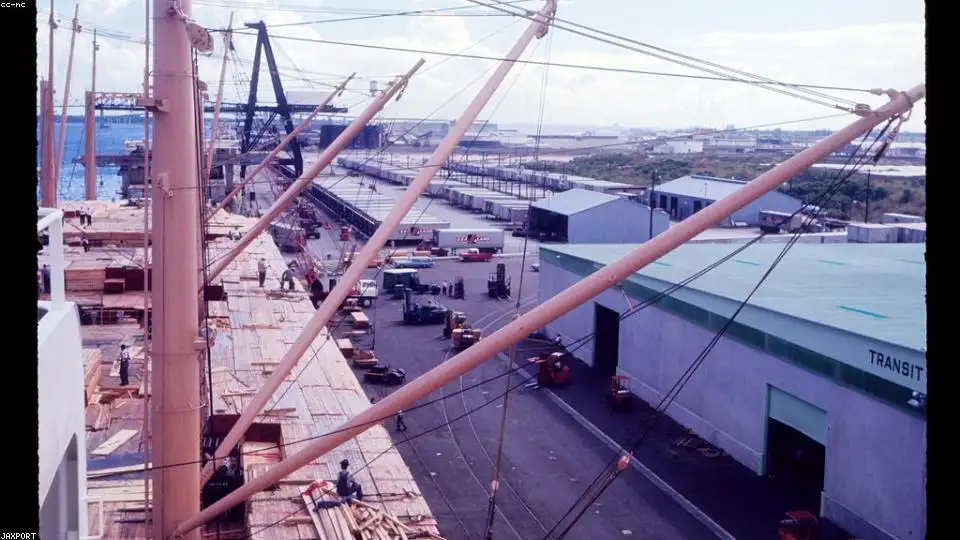
South Asia moves goods across eight countries, three major ocean corridors, and dozens of land border crossings — yet logistics costs here remain among the highest in the world relative to trade volume. For exporters, importers, and freight operators working within the SAARC region, understanding the actual infrastructure, cost drivers, and cross-border clearance processes is not optional — it is the baseline for competitive pricing.
Why Logistics Costs in South Asia Are Higher Than the Global Average
The World Bank Logistics Performance Index (LPI) 2024 ranks most South Asian economies between 3.0 and 3.5 out of 5, well below East Asian peers like Vietnam (3.7) or Thailand (3.7). The gap is structural, not incidental.
Key cost drivers:
- Dwell time at ports: Average container dwell time at Chittagong (Bangladesh) is 4.2 days; at Colombo (Sri Lanka) it is 2.8 days; Nhava Sheva (India) averages 3.6 days. Compare this to Singapore's 0.9 days.
- Inland transport inefficiency: Road freight in Nepal and Bhutan travels at average speeds of 20–30 km/h due to terrain and road quality.
- Multiple border agency overlap: A single truck crossing from India into Nepal may interact with 6–8 separate government agencies.
- Limited rail connectivity: Intra-regional rail freight is almost entirely underdeveloped outside India's own network.
Major Trade Corridors in the SAARC Region
South Asia's logistics network is organized around a few dominant corridors. The rest of the region connects to these arteries through secondary road and river networks.
| Corridor | Countries Connected | Primary Mode | Annual Freight Volume (est.) |
|---|---|---|---|
| India–Bangladesh | IN, BD | Road + River | 9–11 million tonnes |
| India–Nepal | IN, NP | Road | 7–8 million tonnes |
| India–Sri Lanka | IN, LK | Sea (Colombo–Chennai/Tuticorin) | 4–5 million tonnes |
| India–Bhutan | IN, BT | Road | 1.2–1.5 million tonnes |
| Pakistan–Afghanistan | PK, AF | Road | 2–3 million tonnes |
| BCIM Corridor (partial) | BD, IN, CN, MM | Road + Rail (planned) | Under development |
India acts as the geographic hub for all cross-border land logistics in South Asia. This creates both efficiency (India's rail and highway networks are extensive) and friction (every cross-border shipment requires Indian customs clearance regardless of origin-destination pair).
Port Infrastructure: Capacity, Delays and Dry Port Access
Colombo Port (Sri Lanka)
Colombo handles roughly 7 million TEU annually and is the region's largest transshipment hub. It connects South Asia to Europe, East Africa, Southeast Asia, and the Gulf. Most cargo from Nepal, Bhutan, and landlocked Indian states in the Northeast passes through Colombo if it moves by sea.
Strengths:
- Deep-water berths handling vessels up to 18,000 TEU
- 24-hour operations at Jaya Container Terminal (JCT) and CICT
- Low transshipment turnaround: 1.5–2.5 days
Limitations:
- Congestion surcharges applied frequently during peak export seasons (October–January)
- Connectivity to Indian inland points adds 4–6 days transit via Tuticorin or Chennai
Nhava Sheva / JNPT (India)
India's busiest container port handles approximately 6.5 million TEU per year. It connects to rail ICDs (Inland Container Depots) across Maharashtra, Gujarat, Rajasthan, and Delhi-NCR.
Practical details for exporters:
- Rail link to ICD Tughlakabad (Delhi): ~55 hours transit
- Rail link to ICD Ahmedabad: ~36 hours transit
- Direct service to Europe: 22–26 days transit time
- Direct service to UAE: 7–9 days transit time
Chittagong Port (Bangladesh)
Bangladesh's export economy — dominated by RMG (ready-made garments) — depends almost entirely on Chittagong. It handles over 3.2 million TEU per year but suffers from chronic congestion.
Key issues:
- Yard occupancy exceeds 85% during peak garment export months
- Average customs clearance for imports: 3–5 days
- Rail connectivity to Dhaka improved after 2022 upgrades, now reducing truck dependency by ~18%
Karachi Port and Port Qasim (Pakistan)
Together handle approximately 2.8 million TEU annually. Pakistan's exports to the GCC, Europe, and China rely heavily on these two facilities.
- Port Qasim has dedicated berths for bulk commodities (wheat, fertilizer, coal)
- Karachi Port handles containerized exports (textiles, surgical goods, cement)
- Gwadar Port under CPEC remains primarily a long-term infrastructure investment with limited current commercial throughput
Land Border Crossings: Clearance Realities
Land trade within SAARC depends on a network of Integrated Check Posts (ICPs), Land Customs Stations (LCS), and informal crossing points. The efficiency gap between ICPs and older LCS facilities is significant.
| Border Crossing | Countries | Type | Avg. Truck Clearance Time |
|---|---|---|---|
| Petrapole–Benapole | IN–BD | ICP | 12–18 hours |
| Raxaul–Birgunj | IN–NP | ICP | 8–14 hours |
| Wagah–Attari | IN–PK | ICP | 24–48 hours (politically sensitive) |
| Jaigaon–Phuentsholing | IN–BT | ICP | 4–8 hours |
| Akhaura–Agartala | IN–BD | ICP (newer) | 6–10 hours |
India has invested in digitizing customs processes through the ICEGATE platform. Bangladesh operates ASYCUDA World. Pakistan runs the WeBOC system. However, these systems do not currently exchange data in real time — every cross-border transaction requires separate filing on each side.
Freight Rates: Current Benchmarks
Freight rates across South Asia fluctuate significantly based on fuel prices, monsoon road conditions, and global container availability. The following are approximate 2026 benchmarks.
Sea freight (FCL, 20ft container):
| Route | Approximate Rate (USD) |
|---|---|
| Colombo – Dubai | 480–620 |
| JNPT – Hamburg | 1,050–1,350 |
| Chittagong – Rotterdam | 1,100–1,450 |
| Karachi – Jeddah | 420–580 |
| Colombo – Singapore | 280–380 |
Road freight (per tonne, cross-border):
| Route | Approximate Rate (USD/tonne) |
|---|---|
| Delhi – Kathmandu (road) | 48–65 |
| Kolkata – Dhaka (road) | 38–52 |
| Lahore – Kabul (road) | 70–95 |
| Siliguri – Thimphu (road) | 55–72 |
These are ex-works estimates excluding customs duties, port handling fees, and inland cartage at destination. For Nepal and Bhutan, add transit fees for movement through Indian territory.
Customs and Documentation: What Exporters Actually Need
Across SAARC, documentation requirements are more standardized than a decade ago, but still country-specific.
Standard export documentation (region-wide baseline):
- Commercial invoice
- Packing list
- Certificate of origin (mandatory for SAFTA preferential tariff claims)
- Bill of lading or airway bill
- Phytosanitary or health certificates (for agri/food products)
- Letter of credit or payment proof
SAFTA Certificate of Origin: This is the key document for claiming reduced tariff rates under the South Asian Free Trade Area. Without it, exporters pay MFN rates. Processing time: 1–3 working days at issuing chambers of commerce.
Sensitive lists: Each SAARC country maintains a Sensitive List — products excluded from SAFTA tariff reductions. India's Sensitive List for LDC members contains 25 items; Bangladesh maintains 987 items for India. These lists are renegotiated periodically and should be verified before each shipment.
Cold Chain and Specialized Logistics
Agricultural exports, pharmaceuticals, and seafood from Sri Lanka, Bangladesh, and India require cold chain infrastructure that remains underdeveloped at most regional border points.
Current gaps:
- Only 3 of 23 operational ICPs in India have cold storage facilities
- Bangladesh has limited reefer container availability outside Chittagong
- Nepal's cross-border cold chain is almost entirely dependent on Indian logistics operators
This directly affects which products South Asian exporters can competitively sell to European or Gulf markets. A mango shipment from Sindh (Pakistan) or a prawn export from Khulna (Bangladesh) risks quality loss during the inland leg before reaching a temperature-controlled vessel.
Multimodal Logistics: The Real Opportunity
The Bangladesh-Bhutan-India-Nepal (BBIN) Motor Vehicles Agreement, active since 2021 for Bangladesh, India, and Nepal, allows commercial vehicles to cross borders without cargo transshipment. This reduces a typical India–Nepal shipment by 6–9 hours.
Planned improvements by 2027:
- Rail link between Raxaul (India) and Kathmandu (Nepal): under construction
- New ICP at Sabroom (India–Bangladesh): operational from 2025, reduces Tripura transit time by ~40%
- Colombo–Trincomalee freight corridor expansion: increases eastern Sri Lanka port capacity
Multimodal routes that combine sea + rail are currently viable on the India–Bangladesh corridor. Goods arrive at Chittagong by sea, then move by rail to Dhaka or onward to border points. This route is 22–30% cheaper than pure road transport for bulk goods above 5 tonnes.