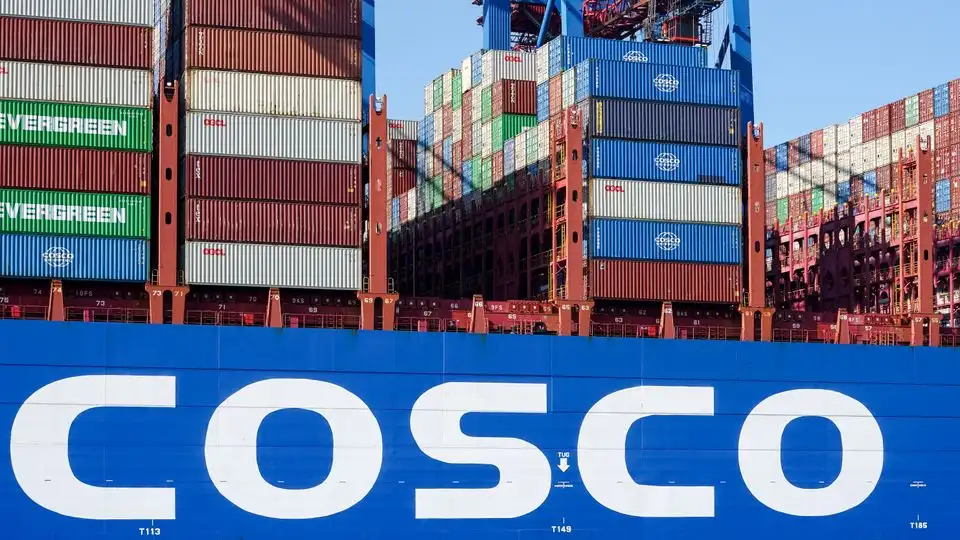
South Asia's trade landscape is moving faster than most regional policy frameworks can track. In 2026, shifts in bilateral agreements, customs digitisation, and post-pandemic supply chain realignments are reshaping how goods move between SAARC member states. This page consolidates key trade developments, tariff changes, and export-import updates relevant to businesses, freight operators, and policy researchers operating across the region.
What Is Changing in Intra-SAARC Trade in 2026
Intra-SAARC trade as a share of total regional trade remains under 6%, compared to over 25% within ASEAN — a gap that reflects both infrastructure deficits and unresolved political barriers. However, several developments in 2026 are creating measurable shifts:
- India-Bangladesh bilateral trade crossed USD 14 billion in FY2025, driven by readymade garments, cotton yarn, and machinery parts
- Nepal's transit trade through India grew by 11% year-on-year following revised transit treaty provisions
- Sri Lanka resumed trade financing arrangements with India after a two-year suspension linked to the 2022 economic crisis
- Pakistan-Afghanistan trade corridor activity increased through Torkham, despite intermittent border closures
The structural problem remains: SAFTA (South Asian Free Trade Area) covers a wide product list, but sensitive lists maintained by each country effectively block the most commercially significant categories.
SAFTA Sensitive Lists: What Is Still Blocked
Each SAARC member state maintains a "sensitive list" — products exempt from SAFTA tariff reductions. These lists have not been meaningfully revised since 2011 in most cases.
| Country | Approx. Sensitive List Size | Key Blocked Categories |
|---|---|---|
| India | 25 items (LDCs), 695 items (non-LDCs) | Textiles, chemicals, agricultural goods |
| Pakistan | 1,169 items | Indian manufactured goods broadly |
| Bangladesh | 87 items | Select industrial inputs |
| Sri Lanka | 1,065 items | Food products, textiles, plastics |
| Nepal | 998 items | Varied manufactured goods |
Pakistan and India do not currently have active direct trade — India suspended Most Favoured Nation status to Pakistan in 2019, and no restoration has occurred as of mid-2026. All bilateral trade between them is effectively routed through third countries, primarily the UAE.
Customs Digitisation Updates Across the Region
Several SAARC members have made concrete progress on customs automation in the last 18 months. This directly affects clearance times, documentation requirements, and compliance costs for exporters.
India: The ICEGATE platform now handles over 98% of customs declarations electronically. Faceless assessment rollout is complete for major ports including JNPT, Mundra, and Chennai. Average customs clearance time for sea cargo dropped from 85 hours (2022) to under 47 hours (2025 data).
Bangladesh: The National Board of Revenue completed phase two of its Automated System for Customs Data (ASYCUDA World) integration. Risk-based selectivity now applies at Chittagong port, which handles 92% of Bangladesh's container traffic.
Sri Lanka: Sri Lanka Customs introduced the Single Window System in 2024. As of 2026, it covers 14 government agencies and has reduced pre-arrival document submission timelines by approximately 30%.
Nepal: Customs modernisation at Birgunj Integrated Check Post continues under ADB support. Cross-border truck turnaround time has improved but still averages 36-48 hours — significantly above benchmarks for comparable landlocked economies.
Pakistan: WEBOC (Web-Based One Customs) remains the primary system. Integration with the Single Window is partial; full rollout is delayed to 2027 per FBR communications.
Export Trends: Key Commodities and Corridors
India's Export Position Within SAARC
India dominates intra-regional exports with roughly 75-80% share of total intra-SAARC trade value. Primary export categories to the region:
- Pharmaceutical products (especially to Sri Lanka, Nepal, and Bangladesh)
- Cotton and yarn (Bangladesh is India's largest regional buyer)
- Petroleum products (Nepal, Bhutan, and Sri Lanka)
- Machinery and electrical equipment
- Vegetables and cereals (Nepal, Bhutan)
India's export of petroleum products to Sri Lanka under the credit line arrangement accounts for a significant portion of bilateral trade recovery since 2023.
Bangladesh's Growing Export Footprint
Bangladesh's export diversification remains limited — over 83% of total export revenue comes from RMG (readymade garments). However, within SAARC, Bangladesh is increasingly exporting:
- Jute and jute goods (primarily to India and Pakistan)
- Frozen fish and seafood
- Ceramic products (growing market in Nepal and Bhutan)
Sri Lanka's Niche Export Sectors
Sri Lanka's export recovery is still underway. Active categories in regional trade:
- Rubber and rubber products
- Processed coconut products (desiccated coconut, coconut oil)
- Apparel (primarily to India under preferential terms)
- Spices (cinnamon, pepper — re-export to regional markets)
Trade Barriers That Still Affect Cross-Border Business
Beyond tariffs and sensitive lists, non-tariff barriers (NTBs) remain the most reported obstacle by exporters operating in the SAARC corridor.
Common NTBs reported in 2025-26:
- Para-tariff measures such as regulatory duties and supplementary duties applied above the bound rate
- Sanitary and Phytosanitary (SPS) standards that are not harmonised across the region
- Inconsistent application of Rules of Origin under SAFTA
- Limited mutual recognition of testing laboratories and product certifications
- Port and land border infrastructure gaps leading to demurrage and detention charges
A 2025 ESCAP report noted that the cost of trading across South Asian borders is 20% higher than in East Asia on a per-container basis, when factoring in delays, documentation, and informal payments.
Logistics and Connectivity Developments
Rail and Road Corridors
India-Bangladesh rail connectivity has expanded with resumption of the Haldibari-Chilahati route and upgrades to the Petrapole-Benapole land port, which handles 30-35% of bilateral trade by value.
The BBIN (Bangladesh-Bhutan-India-Nepal) Motor Vehicles Agreement remains partially operational. Bhutan formally joined the freight movement provisions in 2024, enabling direct trucking for the first time on select corridors.
Maritime Trade Routes
Colombo port continues to serve as the primary transshipment hub for the region. In 2025, Colombo handled approximately 7.2 million TEUs, with a significant share being intra-Asia cargo including SAARC-origin containers.
Chittagong is undergoing deep-draft expansion. The Bay of Bengal Initiative (BIMSTEC, which overlaps with SAARC membership) has increased focus on port-to-port shipping agreements that could bypass India for some Bangladesh-Sri Lanka cargo.
Regional Economy Indicators Relevant to Trade Planning
| Country | GDP Growth (2025 est.) | Inflation (2025 avg.) | Current Account |
|---|---|---|---|
| India | 6.5% | 4.2% | Deficit |
| Bangladesh | 5.8% | 8.1% | Deficit |
| Sri Lanka | 4.1% | 6.0% | Near balance |
| Nepal | 4.4% | 5.5% | Deficit |
| Pakistan | 2.9% | 11.0% | Deficit |
| Bhutan | 5.1% | 3.8% | Deficit |
| Maldives | 5.6% | 3.2% | Deficit |
Pakistan's high inflation and IMF programme conditions continue to suppress import demand, reducing the potential for expanding bilateral trade with any SAARC partner in the near term.
Policy Developments and Upcoming Reviews
- SAARC Chamber of Commerce has pushed for a ministerial-level review of SAFTA sensitive lists in Q3 2026 — no confirmed date as of publication
- India-Sri Lanka Economic and Technology Cooperation Agreement (ETCA) negotiations are ongoing; services trade provisions remain the main sticking point
- Nepal is seeking revision of the Treaty of Trade with India, particularly provisions around non-preferential third-country goods transiting Indian territory
- Bangladesh's LDC graduation from the UN's Least Developed Country category is scheduled for 2026, which will affect its preferential treatment under SAFTA and other regional arrangements
Bangladesh's LDC graduation is commercially significant: it will no longer qualify for the shorter SAFTA sensitive list that currently applies to LDCs, meaning it will face the same tariff barriers as other non-LDC members unless bilateral carve-outs are negotiated.