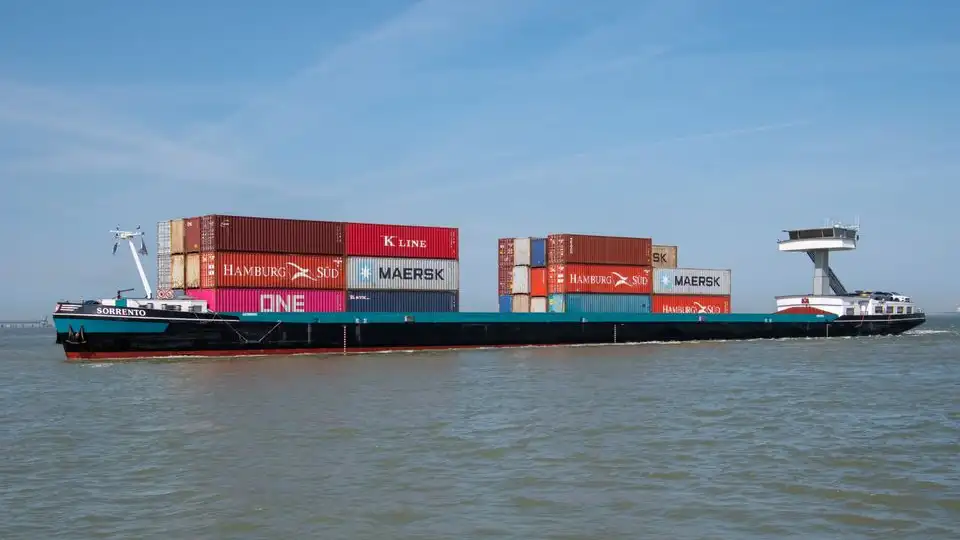
Maldives is a small island economy with a population under 600,000, yet it runs one of the most import-dependent trade systems in South Asia. The country produces very little domestically and relies on external suppliers for nearly everything from construction materials to food. For regional B2B exporters across SAARC, this creates a stable, recurring demand that is worth understanding in detail.
Why Maldives Matters for SAARC Exporters
Maldives imports over 95% of its consumer and industrial goods. According to trade data for 2024-2025, total merchandise imports consistently exceed USD 3 billion annually. This figure dwarfs its export revenue, which remains below USD 500 million and is concentrated almost entirely in fish products and tourism-related services.
For exporters in India, Sri Lanka, Bangladesh, and Pakistan, Maldives is an accessible destination with no domestic manufacturing competition in most product categories.
Key reasons SAARC suppliers target Maldives:
- Geographic proximity, especially for Indian and Sri Lankan exporters
- High dependency on food, fuel, and construction imports
- USD-denominated transactions reduce currency risk for most regional suppliers
- Relatively straightforward customs entry process for standard goods
- Consistent government procurement cycles linked to tourism infrastructure
Maldives Trade Profile at a Glance
| Indicator | Approximate Value (2024-2025) |
|---|---|
| Total imports | USD 3.1-3.4 billion |
| Total exports | USD 380-480 million |
| Trade deficit | USD 2.6-3.0 billion |
| Top import source (goods) | China, India, UAE |
| Top export product | Skipjack and yellowfin tuna |
| Primary export market | EU, Thailand, Sri Lanka |
| Main import categories | Fuel, food, construction materials, machinery |
India holds a strong position as one of the top three import sources, with consistent bilateral trade volumes supported by the Comprehensive Economic Partnership Agreement (CEPA) signed in 2023 and operationalised through 2024-2026.
Main Import Categories
Understanding what Maldives actually buys is the starting point for any export strategy.
Food and beverages form the largest non-fuel import category. Rice, wheat flour, lentils, vegetables, poultry, dairy, and packaged foods account for a substantial share. The tourism sector alone requires continuous food supply for over 170 operational resorts as of 2026.
Fuel and petroleum products represent the single largest import by value. Almost all electricity generation and marine transport in the archipelago depends on diesel fuel.
Construction materials show demand spikes tied to resort development, government housing projects, and island infrastructure. Cement, steel, tiles, aluminium profiles, and PVC products move in significant volumes.
Machinery and electrical equipment serve the hospitality industry, telecommunications, and public infrastructure. Air conditioning units, generators, desalination equipment, and solar panels are imported in growing quantities.
Pharmaceuticals and medical supplies are entirely imported. The government hospital and private clinics depend on external procurement.
Consumer goods including textiles, footwear, electronics, and personal care products are imported for both resident population and resort retail.
Maldives Export Structure
Maldives exports are structurally narrow. Marine products account for roughly 80-85% of all merchandise exports by value.
| Export Category | Share of Total Exports |
|---|---|
| Fresh and frozen tuna | 55-60% |
| Canned/processed fish | 20-25% |
| Other marine products | 5-8% |
| Remaining goods (aggregate) | Under 5% |
The EU, Japan, Thailand, and Sri Lanka are the primary buyers of Maldivian fish. Export volumes are sensitive to fishing quotas, vessel availability, and international commodity prices for tuna.
Maldives does not export manufactured goods in any meaningful quantity. The country has no significant agricultural surplus beyond fish. This structural reality means that for the foreseeable future, export earnings will remain constrained while import dependence deepens.
Customs and Import Procedures in Maldives
The Maldives Customs Service administers import controls under the Maldives Customs Act. The process for most standard goods involves the following steps:
- Register as an importer with the Maldives Inland Revenue Authority (MIRA)
- Obtain an import permit for regulated goods (food, pharmaceuticals, construction materials in some categories)
- Submit a customs declaration via the Maldives TradeNet electronic system
- Provide commercial invoice, packing list, bill of lading or airway bill, and certificate of origin
- Pay applicable import duties and goods and services tax (GST) at point of clearance
- Goods inspected and released from Malé port or Velana International Airport cargo terminal
Import duty rates vary by product category. Maldives does not apply a uniform tariff schedule. Selected duty ranges:
| Product Type | Import Duty Rate |
|---|---|
| Fuel | 0% (exempt) |
| Rice and wheat flour | 0% (essential goods) |
| Fresh vegetables and fruits | 0-5% |
| Packaged food products | 5-15% |
| Construction materials | 5-10% |
| Consumer electronics | 10-15% |
| Alcoholic beverages | 200%+ (restricted) |
| Tobacco | High specific duty |
Alcohol and tobacco face prohibitive rates and are subject to strict controls, with supply permitted only to resorts under specific licensing frameworks.
GST in Maldives applies at 8% (general rate) and 16% for tourism-sector goods and services as of 2025-2026.
SAARC Trade Framework and Maldives
Maldives is a member of the South Asian Free Trade Area (SAFTA), which provides a preferential tariff framework among SAARC nations. Under SAFTA, Maldives qualifies as a Least Developed Country (LDC), which grants it additional concessions from other member states.
Practical implications for exporters:
- Indian exporters can claim reduced SAFTA preferential rates on eligible goods by submitting a valid certificate of origin in the SAFTA format
- Sri Lankan exporters benefit from the existing bilateral Free Trade Agreement (FTA) with Maldives in addition to SAFTA preferences
- Bangladesh exporters exporting RMG and other eligible categories may access zero-duty entry under LDC provisions in reverse
- SAFTA sensitive lists still exclude certain agricultural and industrial products from full liberalisation
Despite the framework, transaction-level use of SAFTA preferences remains inconsistent. Many small and mid-sized exporters across SAARC member states do not claim preferential rates due to documentation complexity or lack of awareness among freight forwarders.
Logistics and Shipping Routes
All goods entering Maldives arrive by sea or air. There are no road or rail connections to the mainland by definition.
Sea freight routes from South Asia:
- Colombo to Malé: approximately 36-48 hours transit, regular feeder services, most efficient route for South Asian cargo
- Chennai / Tuticorin to Malé: 3-5 days, direct and transhipment services available
- Chittagong to Malé: 8-12 days via transhipment at Colombo
Air freight is viable for perishables, pharmaceuticals, spare parts, and high-value goods. Velana International Airport handles air cargo, with connections through Colombo, Chennai, Mumbai, and Dubai.
Container volumes at Malé port are concentrated in 20-foot general purpose and reefer containers. Cold chain logistics within the archipelago is underdeveloped beyond Malé atoll, which adds complexity for perishable exporters supplying outer island resorts.
Key logistics considerations:
- Final-mile delivery to resort islands requires inter-island boat or seaplane transfer, typically arranged by the buyer
- Lead times must account for seasonal weather disruptions during the southwest monsoon (May to October)
- Palletisation standards should align with the limited handling equipment at smaller island jetties
Trade Barriers and Practical Challenges
Maldives trade is not without friction for regional exporters. Common barriers:
Foreign exchange access: Maldives has faced periodic USD liquidity constraints. Importers sometimes delay payment due to limited access to hard currency through local banks. Payment terms with established importers should factor in this risk.
Market concentration: A small number of trading houses in Malé control import distribution for most product categories. Market entry often requires going through these intermediaries rather than selling directly to end users.
Regulatory approvals: Food products require registration with the Maldives Food and Drug Authority (MFDA). The process can take 4-12 weeks and must be completed before shipment to avoid delays at customs.
Port infrastructure: Malé port has capacity limitations. During peak import periods (ahead of Ramadan, tourist season preparation), congestion adds 3-7 days to clearance timelines.
Documentation standards: Certificates of origin, halal certificates for food, and shelf-life declarations are frequently required. Missing or incorrect documents result in holds that are expensive to resolve from a distance.
Opportunities for Regional Exporters in 2026
The Maldivian government's infrastructure pipeline through 2026-2028 includes social housing expansion on Hulhumalé, new resort development in northern atolls, and renewable energy projects across inhabited islands. These create procurement opportunities in:
- Solar panels and inverters
- Prefabricated construction systems
- Water and wastewater treatment equipment
- Cold storage units for fisheries sector modernisation
India and Sri Lanka are best positioned to capture a larger share of these tenders given logistics advantages and existing trade relationships. Bangladesh exporters with competitive pricing in building materials and textiles also have realistic entry points.