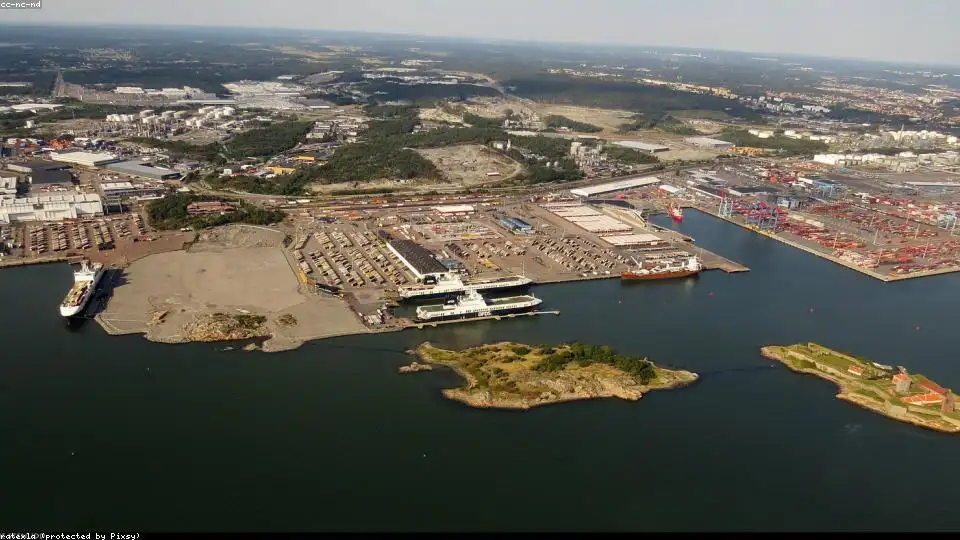
Shipping cargo to South Asia involves navigating eight distinct customs regimes, variable port capacity, and infrastructure gaps that can add days or weeks to transit times. This guide covers the practical mechanics — port-by-port performance, freight rate benchmarks, customs documentation, and SAARC-specific trade corridors — for exporters moving goods into the region.
Why South Asia Freight Logistics Is More Complex Than It Looks
South Asia accounts for roughly 4% of global merchandise trade but handles over 14 billion USD in intra-regional trade annually. Despite geographic proximity, intra-SAARC shipping often routes through third-country hubs — particularly Colombo and Singapore — because direct bilateral port connectivity remains limited. A container moving from Mumbai to Chittagong may transit Colombo, adding 4–6 days versus a direct service.
The region's freight complexity stems from three structural issues:
- Inconsistent cabotage rules across member states
- Bilateral trade restrictions that override SAFTA provisions
- Port infrastructure concentrated at a few nodes (Nhava Sheva, Colombo, Karachi) while secondary ports remain underdeveloped
Major Ports in South Asia: Capacity and Performance
| Port | Country | Annual TEU Capacity | Average Vessel Turnaround | Key Trade Lanes |
|---|---|---|---|---|
| Nhava Sheva (JNPT) | India | 7.5M TEU | 2.1 days | Middle East, Europe, East Asia |
| Mundra | India | 8.4M TEU | 1.8 days | Gulf, Africa, Europe |
| Colombo | Sri Lanka | 9.0M TEU | 1.5 days | Global transshipment hub |
| Karachi (KICT/PICT) | Pakistan | 2.8M TEU | 3.4 days | Middle East, China |
| Chittagong | Bangladesh | 3.5M TEU | 4.1 days | East Asia, Europe |
| Colombo South Terminal | Sri Lanka | 4.5M TEU | 1.3 days | Deep-sea calls |
Colombo functions as the dominant transshipment hub for landlocked SAARC members. Nepal and Bhutan rely on Indian rail-road corridors to Kolkata Port or the Siliguri corridor. The Maldives is served almost entirely through Colombo with onward feeder vessels.
Freight Routes: Direct vs. Transshipment
Direct Services
Direct port-to-port services exist on high-volume lanes, primarily:
- Europe to Nhava Sheva/Mundra: Major carriers (MSC, Maersk, CMA CGM) run weekly direct loops; transit 20–26 days from Northern Europe
- China to Chittagong: Direct calls on Asia-South Asia (ASA) strings; transit 9–13 days from Shanghai
- Middle East to Karachi: Short-sea services; transit 4–6 days from Jebel Ali
Transshipment Routes
For secondary ports and landlocked destinations:
- Colombo hub model: Feeder vessels connect Colombo to Tuticorin, Kochi, Male, and secondary Indian ports. Additional transit: 3–7 days
- Singapore hub: Used for cargo from East Asia destined for Bangladesh or Myanmar corridors
- Port Klang: Alternative transshipment for West India cargo from Southeast Asia
Transshipment adds cost — typically 80–150 USD per TEU in handling charges — plus schedule reliability risk at the hub port.
SAARC Trade Corridors and Regional Connectivity
The SAARC Preferential Trading Arrangement (SAPTA) and the South Asian Free Trade Area (SAFTA) framework theoretically reduce tariffs among member states, but actual cargo movement relies on specific corridor agreements.
Active multimodal corridors as of 2026:
- India-Bangladesh: BIWTA inland waterways protocol enables movement via Ashuganj and Sirajganj; road connectivity through Petrapole-Benapole (highest-volume land border in South Asia, handling 7–8 billion USD annually)
- India-Nepal: 7 designated transit points; Raxaul-Birgunj corridor handles ~65% of Nepal's trade volume; ICD Birgunj connected to Kolkata Port by rail
- India-Bhutan: Road-only connectivity through Phuentsholing, Samdrup Jongkhar, and Gelephu
- India-Sri Lanka: Merchant shipping agreement; ferry service at Talaimannar-Mannar remains operationally intermittent; sea freight via Colombo dominates
The Bangladesh-Bhutan-India-Nepal (BBIN) Motor Vehicles Agreement, fully operational since 2023, has reduced transit time for overland cargo between these four countries by an estimated 30–40% by eliminating cargo transshipment at border points.
Customs Documentation Requirements by Country
| Country | Key Import Documents | Average Customs Clearance Time | Notable Requirement |
|---|---|---|---|
| India | Bill of Lading, Commercial Invoice, Packing List, BIS certification (for regulated goods), FSSAI (food) | 2–4 days (ICEGATE) | Mandatory ISI/BIS marking for 400+ product categories |
| Bangladesh | B/L, C/I, P/L, HS Code declaration, IRC/ERC | 5–9 days | Pre-shipment inspection for certain goods |
| Pakistan | B/L, C/I, P/L, Form E, SRO-based exemption docs | 6–12 days | Import ban list and SRO-based licensing for specific categories |
| Sri Lanka | B/L, C/I, P/L, CUSDEC, CESS declaration | 3–5 days | PAL (Ports and Airports Levy) applies |
| Nepal | B/L, C/I, P/L, Trade License copy | 4–7 days | Transit via India; requires Indian customs transit document |
| Maldives | C/I, P/L, AWB/B/L | 2–3 days | No VAT on imports; 5% green tax on specific categories |
India's ICEGATE single-window system has materially improved clearance times for compliant shipments. However, HS code disputes — particularly for electronics and chemicals — remain a common cause of detention.
Incoterms Most Used in South Asia B2B Trade
The choice of Incoterms has direct implications for who manages port handling, customs brokerage, and inland delivery.
Common usage patterns in the region:
- FOB (Free on Board): Most prevalent for Bangladesh garment exports; seller delivers to named port, buyer controls ocean freight
- CIF (Cost, Insurance, Freight): Common for imports into Pakistan and Sri Lanka; seller arranges freight and minimum insurance to destination port
- DAP (Delivered at Place): Growing usage for India-Nepal corridor trade; seller takes responsibility through to named delivery point in Nepal
- EXW (Ex Works): Used by Indian exporters to Gulf buyers who have established freight relationships
- DDP (Delivered Duty Paid): Rarely used; appears in project cargo and government procurement where the foreign supplier is expected to manage all import obligations
For intra-SAARC shipments, DAP is increasingly preferred because it gives the buyer control over customs clearance while the seller handles freight, reducing dispute risk over import duties applied locally.
Freight Rate Benchmarks (2026)
Rates fluctuate with carrier capacity and seasonal demand. The following are Q1 2026 indicative ranges for 20-foot container (FCL):
| Origin | Destination | Rate Range (USD) | Transit Time |
|---|---|---|---|
| Shanghai | Nhava Sheva | 900–1,400 | 18–22 days |
| Shanghai | Chittagong | 700–1,050 | 9–14 days |
| Jebel Ali | Karachi | 280–420 | 4–6 days |
| Rotterdam | Mundra | 1,200–1,800 | 20–25 days |
| Colombo | Male (feeder) | 180–260 | 2–3 days |
| Kolkata | Birgunj (rail) | 350–500 | 6–9 days |
LCL rates in South Asia are typically 18–28 USD per CBM on main lanes, with a minimum charge of 1 CBM. LCL consolidation hubs for the region include Nhava Sheva, Colombo, and Dubai (for Pakistan-bound cargo).
Common Shipping Delays and How to Avoid Them
Port congestion: Chittagong experiences seasonal congestion during pre-Eid shipment surges (March-April, June-July). Bookings 3–4 weeks ahead of these periods reduce rollover risk.
Documentation errors: Indian customs reject approximately 12–15% of first-time import declarations due to incorrect HS codes or missing BIS certification. Using a licensed customs house agent (CHA) with category-specific experience cuts this rate significantly.
Transshipment mis-connection: Colombo feeder schedules have 60–72 hour windows. If the mother vessel arrives late, cargo can miss the feeder by hours. Booking with carriers who control both the main line and feeder service reduces this exposure.
Inland delivery gaps: Road connectivity from Chittagong to Dhaka industrial zones (Gazipur, Narayanganj) involves 4–6 hours of road transit but can extend to 12+ hours during monsoon-related road deterioration (June-September).
Packaging and Labeling Requirements
Several South Asian markets enforce product-specific labeling before customs release:
- India: Mandatory MRP (Maximum Retail Price), importer name/address, country of origin, and net weight in metric units on consumer goods; Legal Metrology Act compliance
- Bangladesh: Bangla language labeling required on food products sold to end consumers
- Pakistan: Urdu language on packaging for retail food, pharma, and cosmetics
- Sri Lanka: Sinhala and Tamil on food labels for retail; English accepted for B2B/industrial
For B2B shipments, commercial packaging with English-language documentation is generally accepted at customs, but verify at the category level since food, pharma, and regulated items carry additional requirements.